
 Museum
 Historic Residence
 Spaces & Places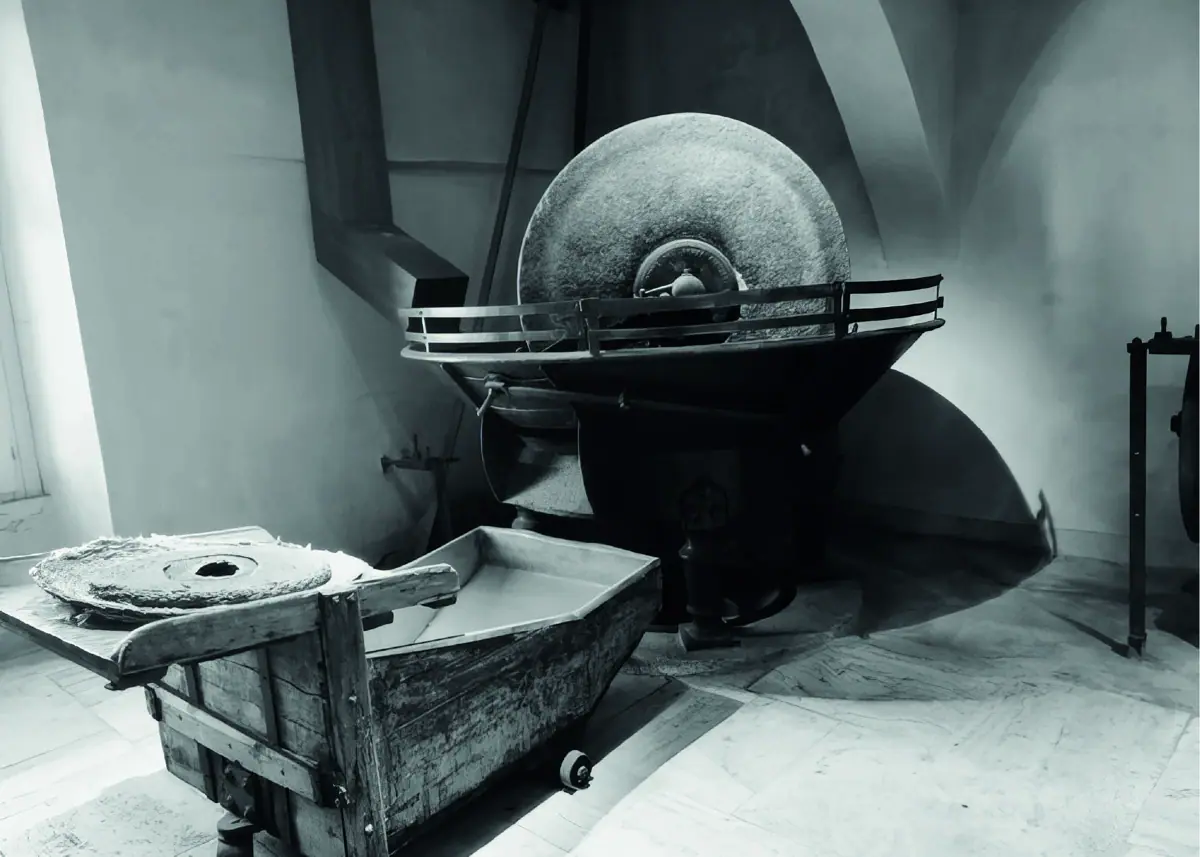
Oil production in the olive mill
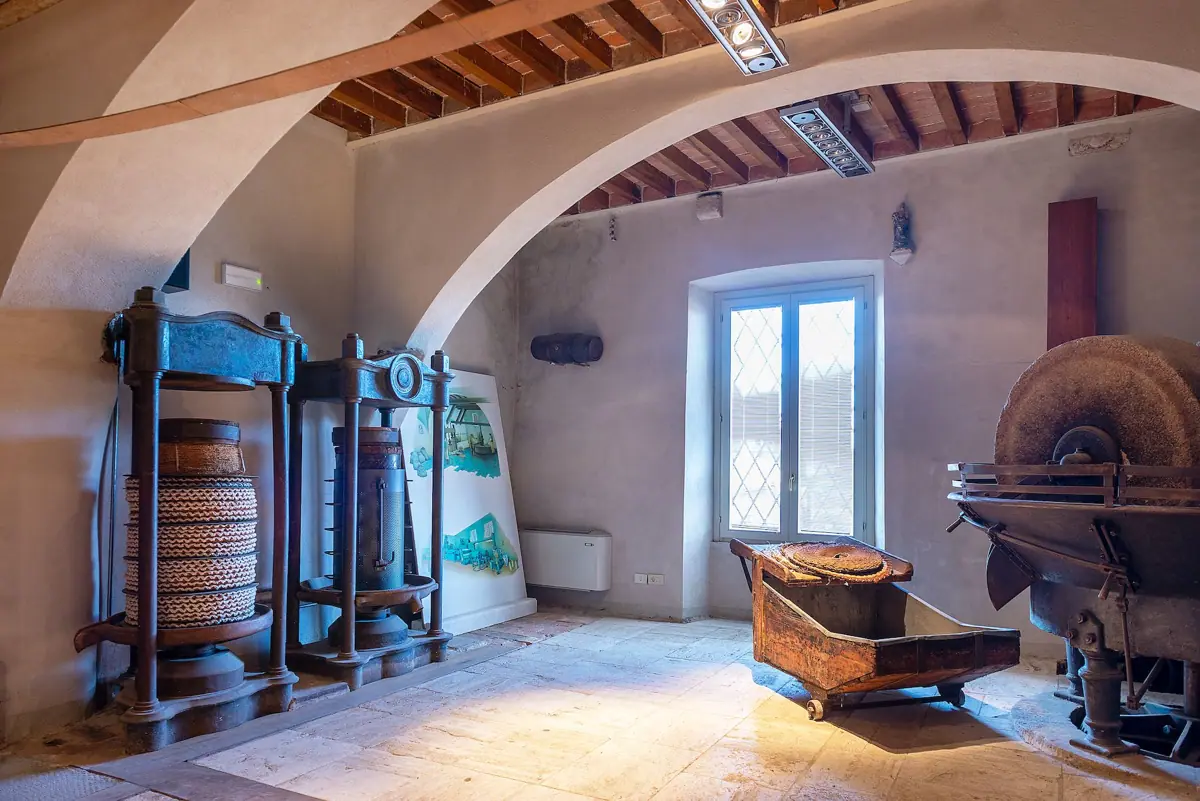
The Grancia delle Serre oil mill, dating from the early decades of the 20th century, is a testament to the ancient Tuscan oil-making tradition. Operations were led by an expert, called an “oliandolo,” who was responsible for processing the olives to obtain excellent quality oil.
Once harvested, the olives were taken to the mill to be crushed and pressed. The process took place in a two-mill, stone mills that rotated vertically on a raised stack (or basin), where the olives fell through a hopper positioned above. The millstones were driven by a vertical shaft, connected by belts to a mechanical motor. The speed of the millstones, between 4 and 12 revolutions per minute, was carefully regulated: excessive movement would heat the paste, thus compromising the quality of the oil.
The resulting paste from grinding was collected in a cart and prepared for pressing. At this point, hydraulic presses intervened, sturdy all-metal machines that, through a hydraulic pump, transmitted pressure to the piston placed under the press plate. The compression was slow and gradual to allow the oil to separate completely from the paste. The maximum pressure achieved could reach up to 300 atmospheres, equivalent to 120-150 thousand kilograms. The first pressing produced a virgin oil, considered to be of higher quality; then, a second pressing was carried out with the addition of hot water to extract the remaining oil, of lower quality, called pomace oil.
After pressing, the olive paste was placed in fiscòli, flexible baskets composed of vegetable filaments. The fiscòli were stacked on top of each other under the press, separated by metal discs that facilitated their compression. At this point, the resulting liquid-a mixture of oil and vegetable water-was passed to the clarifier, a room dedicated to clarifying the oil.
In the clarithouse, the oil was poured into dry, clean terracotta basins, where it rested for about a day. During this time, the solid residue would settle to the bottom, allowing the clear oil to rise to the surface and be recovered. Often, in the center of the clarithium was a guadagnolo, an earthenware vessel used to collect additional amounts of oil left in suspension.
These processes, while traditional, were the result of centuries of refinement and represented a key moment in Tuscan oil production. Despite the introduction of the first mechanical innovations in the twentieth century, the traditional method retained a central role for a long time, especially in rural areas.